FUE Hair Transplant
FUE — follicular unit extraction — is the method behind almost every modern hair transplant, including DHI and Sapphire, which are variations on how the grafts are placed rather than how they are taken. Follicles are removed one at a time with a tiny punch, leaving dots rather than a line.
What is FUE?
FUE removes follicular units individually using a cylindrical punch under a millimetre wide. Each extraction leaves a tiny round wound that heals as a pale dot, invisible at normal hair length. It replaced the older strip method, which removed a band of scalp and left a linear scar.
The operation has three distinct stages: extraction, channel opening and placement. The middle stage is the one that determines whether the result looks natural — the angle, direction and density of the channels decide how the hair falls, and it is the part that requires a surgeon's judgement rather than manual speed.
FUE and its variations
Who is a good candidate?
- A stable pattern of loss, ideally observed over a year or more — usually meaning age 25 and above
- Adequate donor density at the back and sides, confirmed by examination and not by photograph
- Realistic expectations of coverage rather than restored teenage density
- No untreated scalp disease, active infection or uncontrolled diabetes
- Willingness to consider medical treatment to slow further loss
- Able to avoid smoking, alcohol and strenuous exercise around the procedure
- Understanding that a second session may be needed in five to ten years
Preparation
- Examination of donor density with a densitometer, and an agreed graft number in writing
- Hairline designed, drawn and photographed with you sitting upright, before the day of surgery
- Blood tests including hepatitis and HIV screening, and clotting if indicated
- Stopping aspirin, anti-inflammatories and vitamin E about ten days before
- No alcohol for three days and no smoking for at least a week before — both reduce graft survival
- Hair left unshaven until the clinic decides; some techniques need length preserved
- Arranging ten days before any event where you would rather not have visible scabs
How the procedure is performed
The donor area is shaved and numbed with local anaesthetic. Follicular units are then extracted one at a time with a punch, and each graft is inspected under magnification and kept in cooled solution. Time out of the body is the main determinant of survival, so an organised team matters more than raw speed.
Recipient channels are then opened, each angled to match the natural direction of hair in that part of the scalp — flat and forward at the hairline, steeper at the crown. Grafts are placed with single-hair units at the front edge and multi-hair units behind, which is what produces a soft, natural transition rather than a visible wall of hair.
Anaesthesia, duration and stay
- Anaesthesia: local, with optional sedation; you are awake throughout
- Duration: 6–8 hours for 2,000–3,000 grafts, with breaks and lunch
- Hospital stay: none — it is a day procedure
- Stay in the country: 3–4 days, so the first wash and check are done before you fly
- Return to desk work: 3–5 days; visible scabs for 7–10 days
- No gym, sauna, swimming or direct sun for four weeks
- Sleeping semi-upright for the first three nights to limit forehead swelling
Recovery and regrowth timeline
Results and graft survival
In competent hands graft survival is typically 90–95%. Survival falls when grafts are out of the body too long, handled roughly, allowed to dry, or packed too densely for the blood supply to reach them — all of which are consequences of rushing, which is why session size and team organisation matter.
The donor area is a finite resource. Roughly 5,000–7,000 grafts is the lifetime ceiling for most people, and extracting too aggressively in one session thins the back of the head visibly — a mistake that cannot be undone and is increasingly seen in patients returning from high-volume clinics.
Risks and complications
- Poor graft survival, producing patchy density that only becomes obvious at twelve months
- Visible thinning or over-harvesting of the donor area, which is permanent
- An unnatural hairline — too low, too straight or with the wrong hair angle
- Folliculitis, small pimples around growing hairs, usually settling with treatment
- Shock loss of existing native hair around the transplanted area, usually temporary
- Numbness of the scalp for several weeks to months
- Infection or bleeding — uncommon with proper sterile technique
- Cysts or ingrown hairs in the recipient area during regrowth
Cost and what should be included
Most clinics price either per graft or as a flat package. Flat packages sound simpler but often come with an unstated graft ceiling, so ask what happens if you need more than the package assumes — and get the agreed number in writing before you travel.
- The agreed graft number, in writing, and the price if more are needed
- Who performs extraction and implantation, named — the single biggest cost driver
- Blood tests and infection screening
- Anaesthesia, medication and the post-operative kit
- The first wash performed at the clinic, and instructions in your own language
- Follow-up reviews at 6 and 12 months, and how they are conducted
- The written policy on a top-up session if density is inadequate at twelve months
Judge the donor area, not just the hairline
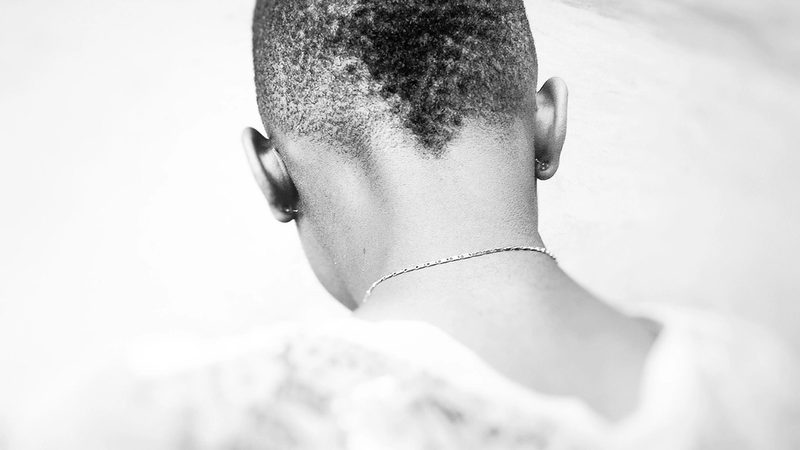
When you look at a clinic's results, ask for photographs of the back of the head at twelve months, not only the front. Over-harvesting shows there first and it is permanent. A clinic that only ever shows you the hairline is showing you the easy half of its work.
Frequently asked questions
Does FUE leave scars?
It leaves hundreds of tiny round scars rather than one line — each under a millimetre and invisible at a hair length of a few millimetres or more. They become noticeable only if the head is shaved very short or if too many grafts were taken from too small an area.
How many grafts can be done in one session?
Most surgeons consider 2,500–3,500 a sensible upper limit in a day, because beyond that grafts spend too long out of the body and survival drops. Clinics advertising 5,000 or 6,000 grafts in a single session are usually counting generously and relying on technician labour to get through the volume.
Should I take medication as well?
Usually yes, if you are still actively losing hair. A transplant does not stop the underlying process, so without treatment the native hair around the graft continues to thin and the result looks worse over time. This is a decision to discuss with a doctor, including the side-effect profile — but a surgeon who never raises it is planning only the operation.
Can I fly home the next day?
It is better to stay three or four days so the first wash is done at the clinic and the grafts are checked once. Grafts are fragile for about ten days and are easily dislodged by a headrest, a hat or an accidental knock in a crowded cabin. Flying is not dangerous, but leaving before the first check means nobody has looked at the result of the work you paid for.
How long does FUE surgery take?
A FUE session runs six to eight hours for 2,500 to 3,500 grafts, including a lunch break. The day breaks into three parts: local anaesthesia and extraction in the morning, channel opening after the break, and implantation in the afternoon. You are awake throughout and can talk, watch something or listen to music. Sessions promised in three hours are either very small or rushed.
Who actually performs the FUE — the surgeon or a technician?
In many high-volume clinics, technicians do most of the extraction and implantation while the surgeon designs the hairline and supervises. That is legal in some countries and not in others, and it is the single biggest quality variable in hair transplant tourism. Ask specifically which steps the doctor performs personally, and get the answer in writing before you pay a deposit.
What percentage of FUE grafts survive?
In competent hands 90 to 95 per cent of grafts survive. The number falls when follicles spend too long outside the body, dry out, or are damaged during extraction — which is why time out of body and the skill of the person handling the grafts matter more than the brand name of the technique. No clinic can honestly guarantee 100 per cent, and any that does is selling.
Do I have to shave my whole head for FUE?
Standard FUE requires the donor area to be shaved, and most clinics shave the whole head because it makes extraction and channel placement faster and more accurate. Unshaven FUE exists but is limited to about 1,000 to 1,500 grafts, costs noticeably more and takes longer. If keeping your hair length matters, say so before booking — not on the morning of surgery.
When can I wash my hair after FUE?
The first wash is done in the clinic on day two or three, and you continue it at home daily for about two weeks. You apply a lotion, leave it on for thirty minutes to soften the crusts, then rinse with lukewarm water poured by hand — no shower jet and no rubbing until day ten. Picking scabs off early pulls the graft out with them.
Is FUE better than FUT?
For most patients today, yes — FUE leaves no linear scar, recovery is faster and you can wear your hair short. FUT still has a place: it yields more grafts in one session from a limited donor area and can give slightly higher survival rates in experienced hands. The trade-off is a permanent line across the back of the head, which rules it out for anyone who shaves.
Am I awake during FUE, and does the anaesthesia hurt?
You are awake under local anaesthesia, and the injections are the only genuinely painful part — about five to ten minutes of stinging at the start of the day and again before implantation. Many clinics soften this with a needle-free pressure injector or a cold-air device. After the scalp is numb you feel pressure and movement but not pain, and you can eat, talk and use your phone.
Related reading
More on this treatment
FUE vs DHI: What's Actually Different (and What Isn't)
DHI is FUE with a different planting step, not a different extraction. What the implanter pen changes, where each wins, and claims to ignore.
Is a Hair Transplant Painful? The Anaesthesia, Step by Step
The operation itself is painless. The ten minutes of numbing injections are not, and that is the part worth preparing for. What each stage actually feels like.
Shock Loss: Why Your Transplanted Hair Fell Out
The hairs fall out but the follicles stay. It happens to almost everyone between weeks two and eight, and it is a step in the process, not a failure.
Do You Need a Second Hair Transplant Session?
There are two different reasons for a second session, and only one of them means something went wrong. When to have it, and how much donor you have left.

Hair Transplant Timeline: Day 1 to Month 12
Scabs, the shock-loss panic of week three, the ugly-duckling months and the real growth curve: an honest month-by-month map of the first year.
How Many Grafts Do I Need? Norwood Scale Explained
Find your stage on the Norwood scale, see realistic graft ranges for each, and understand why the donor area sets the ceiling, not your wish list.
Have your case reviewed before you decide anything
Send your photographs and medical history. A board-certified surgeon reviews them and comes back with an honest assessment of what is achievable, which technique suits you, and an itemised written quote — before any money changes hands.
Get a FREE Second OpinionThis page provides general information about this procedure; it is not medical advice, a diagnosis, or a treatment recommendation. Capital Oncology Group is a care-coordination service and not a medical provider. All procedures are performed by independent, accredited hospitals and licensed physicians, and the decision to operate must be made by a qualified surgeon after examining you individually.